
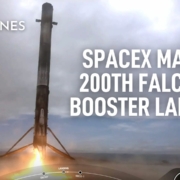
200th Falcon 9 booster landing
In a rideshare mission called Transporter-8, SpaceX launches a Falcon 9 rocket containing 72 small satellites from California’s Vandenberg Space Force Base to orbit and lands the returning booster, eight minutes later, back on Earth, marking the 200th booster landing in SpaceX’s history. This is the ninth launch and landing for this particular booster. The rocket’s upper stage continued hauling aloft the 72 payloads, which included “cubesats, microsats, a re-entry capsule and orbital transfer vehicles carrying spacecraft to be deployed at a later time.” The satellites deployed from the Falcon 9’s upper stage, separate over a 24-minute span, beginning an hour after liftoff. Transporter-8 was SpaceX’s second mission in about 14 hours, the eighth small-satellite “rideshare” mission launched by SpaceX, and its third such flight of 2023.
After delivering 72 spacecraft to orbit, Falcon 9 returns to Earth and completes SpaceX’s 200th landing of an orbital class rocket pic.twitter.com/7Aw52C97jk
— SpaceX (@SpaceX) June 13, 2023

Pentagon buys Starlink terminals for Ukraine
The Pentagon signs a contract to buy Starlink terminals and services to aid the Ukrainian military in its war against Russia. Starlink has previously donated terminals to the Ukrainian war effort. Shortly after the country was invaded, Starlink donated 3,667 terminals to Ukraine and the country had approximately 22,000 of them as of December, with funding secured to receive 10,000 more. The terminals access a network of satellites to provide internet and help maintain stable communications and internet connections for the Ukrainian military despite the attacks on their telecommunications infrastructure. Details about terminal costs, specific capabilities, contracts, and partners involved in the deal were not revealed for “security reasons.”
SpaceX releases Starship launch video
SpaceX releases a video of the first Starship launch, which flew for four minutes on April 20, 2023.
Another step closer to Mars — the first flight test of a fully integrated Starship and Super Heavy rocket
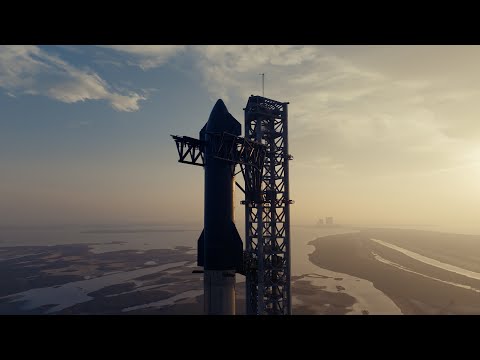

Musk: Next Starship launch in two months
Musk says the next Starship launch will take place in two months, after tested upgrades are made to the launchpad that was destroyed during the first launch.
Major launchpad upgrades should be complete in about a month, then another month of rocket testing on pad, then flight 2 of Starship
Major launchpad upgrades should be complete in about a month, then another month of rocket testing on pad, then flight 2 of Starship
— Elon Musk (@elonmusk) May 27, 2023

Starlink dishes discounted $100 at Best Buy, Home Depot
SpaceX offers a $100 discount to US customers for its Starlink satellite internet service if they purchase its standard dish through Best Buy or Home Depot. Both retailers dropped the price from $599 to $499 (although consumers must also pay $90 or $120 per month to receive internet with the Starlink residential plan, depending on their location). Best Buy and Home Depot have blocked sales in U.S. states where the residential tier for Starlink is currently behind a waitlist.

Musk: Starship will lift 300 tons expendable, 180 tons reusable
Responding to a Twitter user, Musk says SpaceX Starship with improved Raptor 3 engines should lift 300 tons in expendable mode, or 180 tons in reusable mode. This compares with two years ago, when Two years ago Musk estimated a Starship would lift 250 tons to orbit in expandable mode and 150 tons in reusable mode. For comparison, the International Space Station weighs 450 tons and took around 50 Space Shuttle launches to complete. An earlier, SpaceX concept, called the Interplanetary Transport System, was planned to carry 550 tons expendable, 300 tons reusable.
Starship payload is 250 to 300 tons to orbit in expendable mode. Improved thrust & Isp from Raptor will enable ~6000 ton liftoff mass.
Starship payload is 250 to 300 tons to orbit in expendable mode.
Improved thrust & Isp from Raptor will enable ~6000 ton liftoff mass.
— Elon Musk (@elonmusk) May 24, 2023

Axiom Mission 2 launches successfully
Axiom Space’s Axiom Mission 2 (Ax-2) to the International Space Station launches successfully from Launch Complex 39A (LC-39A) at NASA’s Kennedy Space Center in Florida.
The Dragon spacecraft used previously flew Crew-4 to and from the space station. Following stage separation, Falcon 9’s first stage lands on Landing Zone 1 (LZ-1) at Cape Canaveral Space Force Station, the first time a booster has been reused on a human spaceflight mission.
During their time on the orbiting laboratory, the crew will conduct over 20 science and technology experiments in areas such as human physiology, physical sciences, and STEAM to ‘help expand knowledge to benefit life on Earth in areas such as healthcare, materials, technology development, and enable industrial advances’.

SpaceX launches 81st Starlink mission, lands booster at sea
SpaceX successfully launches a Falcon 9 rocket, carrying 56 Starlink spacecraft, from Cape Canaveral Space Force Station in Florida, returning it to Earth less than nine minutes later, landing on the SpaceX drone ship, Just Read the Instructions, in the Atlantic Ocean. This was the 11th launch and landing for this Falcon 9 first stage booster, while Starlink Group 5-9 marks the 81st operation Starlink mission, boosting the total number of Starlink satellites launched to more than 4,400.
Falcon 9’s first stage has landed on the Just Read the Instructions droneship pic.twitter.com/bYvC8sH9NX
— SpaceX (@SpaceX) May 14, 2023
Conservationists sue FAA over SpaceX launches
Conservation groups sue the Federal Aviation Administration for approving expanded rocket launch operations by SpaceX without an environmental impact study (EIS), an extensive study that includes public review and can take years or decades to complete. The FAA approved the launches based on a far less thorough assessment and a finding that SpaceX activities at Boca Chica pose “no significant impact” on the environment.
The federal court lawsuit is filed in the District of Columbia by the Center for Biological Diversity, the American Bird Conservancy, Surfrider Foundation, Save RGV (Rio Grand Valley), and the Carrizo/Comecrudo Nation. It says that explosion was only the latest in a series of at least nine that have occurred at Boca Chica in recent years and that the mishaps are disrupting a haven for protected wildlife and vital habitat for migratory birds. The plaintiffs are asking the court to vacate the finding of no significant impact and require a full EIS before any more launches occur.
This case concerns whether the nation’s commitment to preserving our critical wildlife habitat and treasured coastal landscapes must be sacrificed as we reach out to explore the cosmos.

Musk: First Starship launch ‘roughly what I expected’
In an audio chat with SpaceX fans, Musk says Starship’s first test flight was successful, even though it exploded before reaching space, and says a new rocket can be ready for liftoff within six to eight weeks, along with repairs to the damaged launchpad.
The outcome was roughly in what I expected, and maybe slightly exceeding my expectations, but roughly what I expected, which is that we would get clear of the pad. [The launch was] obviously not a complete success, but still nonetheless successful.
Musk says he hadn’t expected a “rock tornado” to be generated under the booster at liftoff and said SpaceX “chose not to start” three of the 33 Raptor engines on the booster, because they were not “healthy enough to bring them to full thrust.” Musk also said the reason Starship slid off the launchpad while ascending was “because of the engine failures.” SpaceX “lost communications” with another Raptor about 27 seconds into the flight due to “some kind of energy event” that knocked the heat shields out of several other engines.
At about 85 seconds, “things really hit the fan” and SpaceX lost its ability to steer the rocket. Finally, Starship’s Automated Flight-Termination System was working too slowly, so it took about “40 seconds-ish” to self-destruct. Still, Musk downplayed the effects of the explosion as a whole, saying the (Boca Chica) “pad damage is actually quite small” and should “be repaired quickly.”
Despite the fact that debris from the explosion fell into the Gulf of Mexico and rained dust onto residents of Port Isabel (as well as their cars and homes), that the U.S. Fish and Wildlife Service called the explosion responsible for a 3.5-acre fire, the spread of debris over 365 acres of land, and throwing of “pulverized concrete” up to 6½ miles, Musk says:
To the best of our knowledge there has not been any meaningful damage to the environment that we’re aware of.
Musk believes, too, that the Starship program does not need $750 million in additional funding it had been set to raise, and will spend about $2 billion on the Starship program to attempt five launches. Musk says he expects success by the end of the year;
I will be surprised if we exit this year without getting to orbit.
FAA grounds Starship pending crash investigation
SpaceX’s Starship rockets are grounded by the Federal Aviation Administration, after the rocket exploded on Thursday morning, to investigate the failed launch. FAA statement:
An anomaly occurred during the ascent and prior to stage separation resulting in a loss of the vehicle. No injuries or public property damage have been reported. The FAA will oversee the mishap investigation of the Starship / Super Heavy test mission. A return to flight of the Starship / Super Heavy vehicle is based on the FAA determining that any system, process, or procedure related to the mishap does not affect public safety. This is standard practice for all mishap investigations. The FAA is responsible for protecting the public during commercial space transportation launch and reentry operations.

Starship launch debris covers Texas coast
SpaceX’s Starship rocket launch causes a massive debris field around the launch pad. The force of the rocket engines creates a crater under the concrete launch pad, sending debris away from the pad at thousands of miles an hour, causing damage to the nearby tank farm, a car parked miles away and forming a dust cloud that blocks out the sun over the Texas coast until strong winds blows it away. Video shows chunks of debris landing in the Gulf of Mexico.
Close up on the vast debris field created by the starship/superheavy launch. It's a crop from the video shot from starbase #SpaceX #StarshipLaunch pic.twitter.com/KYaloIFE7n
— MechDesign.xyz (@MechDesignxyz) April 20, 2023
Starship explodes four minutes into second test attempt
After being delayed from April 18, SpaceX makes a second attempt at launching Starship. After a short countdown hold at 40 seconds the spacecraft launches and clears the tower. Four minutes into the flight, at a height of 34km, the vehicle explodes, after the second stage fails to separate. Musk congratulates the team:
Congrats @SpaceX team on an exciting test launch of Starship! Learned a lot for next test launch in a few months.
Congrats @SpaceX team on an exciting test launch of Starship!
Learned a lot for next test launch in a few months. pic.twitter.com/gswdFut1dK
— Elon Musk (@elonmusk) April 20, 2023
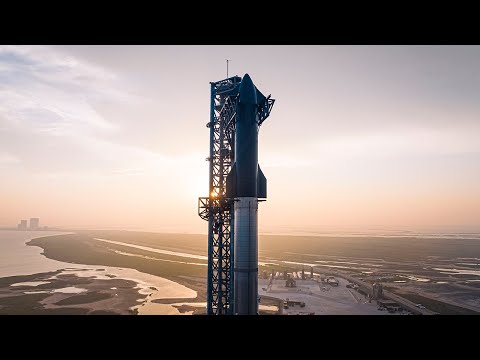
Musk announces Starship blowtorch
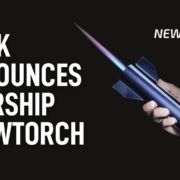
Following Musk’s tweet about a “Mini Starship with flame,” SpaceX announces the pre-sale of a collectable, Starship-themed blowtorch. The $175 burner has a safety lock as well as a windproof, adjustable flame and is being marketed for things like melting cheese and lighting candles. As one advert puts it:
It’s collectible. It’s functional. And it burns, burns, burns. The Starship Torch.
Mini Starship with flame!https://t.co/VGKHyaikTd
— Elon Musk (@elonmusk) April 17, 2023
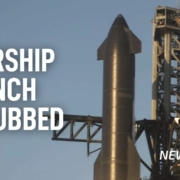
Starship launch scrubbed
The first Starship launch is scrubbed, ten minutes before launch, due to a pressurant valve being frozen. The countdown continues as a ‘wet dress rehearsal’, to T minus 40 seconds. Another launch attempt may happen in the next 48 hours.
A pressurant valve appears to be frozen, so unless it starts operating soon, no launch today
— Elon Musk (@elonmusk) April 17, 2023


Starship launch rescheduled to Apr 20
SpaceX says it is targeting Thursday, April 20 for the first flight test of a fully integrated Starship and Super Heavy rocket from Starbase in Texas. The 62 minute launch window opens at 8:28 a.m. CT and closes at 9:30 a.m. CT.
Teams are working towards Thursday, April 20 for the first flight test of a fully integrated Starship and Super Heavy rocket → https://t.co/bG5tsCUanp pic.twitter.com/umcqhJCGai
— SpaceX (@SpaceX) April 17, 2023
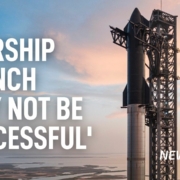
Musk: Starship launch ‘may not be successful’
Musk says expectations should remain low for the Starship system, and that his team is mainly looking to gather data about how the vehicle ascends to space and returns back to Earth.
I guess I would just like to set expectations… low…Success is not what should be expected. It’s just a very fundamentally difficult thing. Probably, tomorrow will not be successful… If we get far enough away from the launchpad before something goes wrong, I would consider that to be a success. Just don’t blow up the launchpad.
Starship is due to launch at 8am CST (2pm BST).
Launch attempt tomorrow pic.twitter.com/czFsQ53Xsa
— Elon Musk (@elonmusk) April 16, 2023

Chinese military wants 13,000 satellites to rival Starlink
Following the success of Musk’s SpaceX Starlink in the Ukraine War, Chinese military researchers want to deploy a national mega-constellation of almost 13,000 low-orbit satellites to emulate Starlink, while military scientists are pursuing research on how to “suppress” or even damage Starlink satellites in wartime scenarios.
Chinese reaserchers in an opaque state-backed project — referred to in China’s satellite industry as “GW” or “Guowang,” translated as “State Network” — have shared concerns in public research and privately with military officials that the project is lagging too far behind SpaceX’s Starlink and should be fast-tracked after the technology withstood practical tests in Ukraine.
The Starlink constellation has finally shown its military colors in the Russia-Ukraine conflict…The focus now is to accelerate the development of China’s own constellation … and explore defensive measures against Starlink-type foreign satellites

Musk: Saudi, UAE investments in SpaceX ‘not true’
Musk denies the report that investors from Saudi Arabia and the United Arab Emirates plan to invest in an upcoming multi-billion dollar funding round for SpaceX.
Not true
Not true
— Elon Musk (@elonmusk) March 24, 2023
Saudi, Abu Dhabi companies to invest in SpaceX
An Abu Dhabi-based company and a unit of Saudi Arabia’s investment fund plan to invest in a multi-billion dollar funding round for SpaceX. The round is reportedly expected to value Musk’s company at about $140 billion.