
Starship 10 test
SpaceX launches its 10th Starship test flight, using Booster-16 and Ship-37 from Starbase, Texas. The mission focuses on validating upgrades to the thermal protection system, testing new hexagonal heat-shield tiles under a steeper reentry profile. For the first time, the flight carries a payload of eight mock Starlink satellites, released via a new “Pez”-style dispenser to simulate future operational deployments. The Super Heavy booster executes lift-off, stage separation, and a controlled boost-back toward the Gulf of Mexico before splashing down as planned. Ship-37 coasts on a suborbital path toward the Indian Ocean, survives maximum heating during reentry, and splashes down within its target zone after a flight of just over an hour. Musk:
Great work by the SpaceX team!!
Great work by the SpaceX team!! https://t.co/Dy1TPmr4kX
— Elon Musk (@elonmusk) August 26, 2025
Starship 8 test
Flight Test 8 takes place using Booster-15 (Block 2) and Ship-34. The booster is caught successfully by the tower (“chopstick” arms) again, marking a repeat catch achievement. Ship-34, however, suffers multiple engine shutdowns (4 of 6 engines prematurely) during flight, loses attitude control, telemetered data ends, then the vehicle is destroyed before completing full mission objectives. The flight also carries approx. 8,000 kg of payload of Starlink mass simulators, but the mission ends in disintegration due to loss of control and hardware failures. Musk:
Not easy making life multiplanetary
Not easy making life multiplanetary
— Elon Musk (@elonmusk) March 7, 2025
Starship 7 test
Starship Flight Test 7 launches from Starbase, Texas with Booster-14 (Block 2) and Ship-33 (first Block 2 upper stage). The mission carries ten Starlink “simulators” on a suborbital trajectory and tries new avionics, upgraded heat shield tiles, and reentry experiments. Booster-14 returns and is caught by the tower via the “chopstick” arms, undamaged and reusable. However, Ship-33 (upper stage) loses telemetry and suffers engine shutdowns late in ascent; it breaks apart mid-flight over the Turks and Caicos Islands. Musk:
Starship made it to the scheduled ship engine cutoff, so big improvement over last flight! Also, no significant loss of heat shield tiles during ascent. Leaks caused loss of main tank pressure during the coast and re-entry phase. Lot of good data to review. Launch cadence for next 3 flights will be faster, at approximately 1 every 3 to 4 weeks.
Starship made it to the scheduled ship engine cutoff, so big improvement over last flight! Also, no significant loss of heat shield tiles during ascent.
Leaks caused loss of main tank pressure during the coast and re-entry phase. Lot of good data to review.
Launch cadence for…
— Elon Musk (@elonmusk) May 28, 2025
Starship 6 Test
SpaceX conducts its sixth test of Super Heavy booster (Booster 13) and Starship (Ship 31) at Starbase, Texas. The test focusses on operational improvements, including experiments with the heat shield, flying the spacecraft at a steeper reentry angle to gather data on thermal protection system performance. The flight carried a banana as payload. After a successful launch and hot-stage separation, the Booster was diverted to splashdown in the Gulf of Mexico instead of being caught by the Mechazilla arms. Ship 31 reignited one of its Raptor engines in space, and after a flight of 1hr 5 mins completed its splashdown in the Indian Ocean. Musk:
Successful ocean landing of Starship! We will do one more ocean landing of the ship. If that goes well, then SpaceX will attempt to catch the ship with the tower.
Successful ocean landing of Starship!
We will do one more ocean landing of the ship. If that goes well, then SpaceX will attempt to catch the ship with the tower. https://t.co/osFud7XXPo
— Elon Musk (@elonmusk) November 20, 2024
Starship Test 5: Mechazilla arms catch Booster
For its fifth flight test, Starship, consisting of the Super Heavy booster (Booster 12) – powered by 33 Raptor engines – and the Starship spacecraft (Ship 30), lifts off from Boca Chica, Texas. At 2m 40s the Super Heavy booster separates from the Starship spacecraft (Ship 30) using hot-staging. Post-separation, the Super Heavy ascends to 69 km (43 miles) and then executes a boostback burn to reverse its course and return towards the launch site, where it slides horizontally into the Mechazilla launch tower’s 30m “chopstick” arms, completing the first successful Heavy Booster catch.
Meanwhile, Starship continues its suborbital trajectory, reaching an apogee of about 212 km (132 miles) over the Indian Ocean. Despite damage to one of its control flaps, Starship maintains stability using its flaps through re-entry to splashdown in the Indian Ocean, approximately 7,000 km (4,350 miles) from separation. Musk:
Even rockets need hugs
Even rockets need hugs 🥰 pic.twitter.com/oF36F0AvBf
— Elon Musk (@elonmusk) October 14, 2024
Starship Test 4: Succesful splashdowns
SpaxeX conducts the fourth flight test of Starship, comprising the Starship Ship 29 upper-stage and Super Heavy Booster 11. The test successfully achieved its two main objectives: simulate a landing with the Super Heavy booster near the surface of the Gulf of Mexico, and ensure Starship could survive peak heating during atmospheric re-entry. Despite minor engine issues, the flight was considered a success, with successful spashdowns. The test was a step forward from the third test, where both stages were destroyed upon re-entry. Modifications included upgrades to the oxygen tanks for better propellant filtration, enhancements to the Raptor engines for improved reliability, and additional roll control thrusters on the ship. The mission profile omitted certain demonstrations from previous tests but included jettisoning the hot staging ring from the booster, a temporary measure for mass reduction during descent.
The FAA did not require a mishap investigation, a first for Starship flights, indicating that the flight stayed within the parameters of planned and authorized activities.
Musk gives high fives to the SpaceX team and his son, Lil X.
Watch Starship’s fourth flight test → https://t.co/bJFjLCiTbK https://t.co/SjpjscHoUB
— SpaceX (@SpaceX) June 6, 2024
Starship explodes four minutes into second test attempt
After being delayed from April 18, SpaceX makes a second attempt at launching Starship. After a short countdown hold at 40 seconds the spacecraft launches and clears the tower. Four minutes into the flight, at a height of 34km, the vehicle explodes, after the second stage fails to separate. Musk congratulates the team:
Congrats @SpaceX team on an exciting test launch of Starship! Learned a lot for next test launch in a few months.
Congrats @SpaceX team on an exciting test launch of Starship!
Learned a lot for next test launch in a few months. pic.twitter.com/gswdFut1dK
— Elon Musk (@elonmusk) April 20, 2023
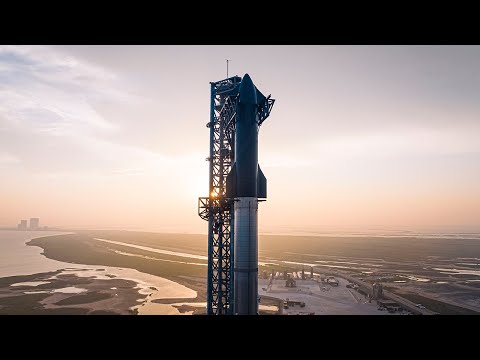
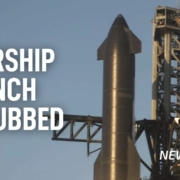
Starship launch scrubbed
The first Starship launch is scrubbed, ten minutes before launch, due to a pressurant valve being frozen. The countdown continues as a ‘wet dress rehearsal’, to T minus 40 seconds. Another launch attempt may happen in the next 48 hours.
A pressurant valve appears to be frozen, so unless it starts operating soon, no launch today
— Elon Musk (@elonmusk) April 17, 2023

Musk ‘not saying’ Starship will get to orbit
SpaceX will debut its Starship vehicle in a month or so, but the chances of its first-ever orbital mission being a success are apparently only about 50%.
I’m not saying it will get to orbit, but I am guaranteeing excitement. So, won’t be boring!…So I think we’ve got, hopefully, about an 80% chance of reaching orbit this year. It’ll probably take us a couple more years to achieve full and rapid reusability.
According to Musk, Starship will be the most powerful rocket to ever fly, featuring about 2.5 times more thrust at liftoff than NASA’s Saturn V. SpaceX hopes that, among other things, Starship will get people and cargo to the moon and Mars. It is designed to be fully and rapidly reusable, which Musk considers the most important breakthrough for making Mars colonization and other ambitious exploration feats feasible.