Declares war on Facebook
Arrington warns Facebook after it hires Crunchbase’s product manager:
Stay the hell away from our employees, Facebook, and fill your employment quotas elsewhere. Anyone else, and I declare war.
Public transit disputes
County Executive Walker and Milwaukee Mayor Barrett argue over how best to use $91.5 million in federal money for transit. Walker opposes using money for rails, instead wanting road vehicles including hybrid express buses in designated lanes. Barrett sees wisdom in road vehicles but is adamant about building a three-mile street car circuit. Walker also proposes that sales tax revenue from automobile sales be used for transit.
Touts accomplishments
Walker touts his accomplishments in speeches that he is getting county government turned around. He has presented the board with five annual budgets without any tax increases, even though this year the county is projected to have a $40 million deficit, he has cut off overly generous pension benefits for new employees, cut the county workforce by almost 20%, and has returned $60,000 in his annual salary. He is pushing for a water park on the county’s north side, and approves of spending $300,000 to clean up lagoons in the parks. He has improved mental health services, encouraged heavier lakefront patrols, endorsed more than $300 million for development of the Park East freeway corridor, and negotiated a new labor agreement that included health insurance concessions. He has long term goals for the county. When asked about running for reelection:
It would be hard to imagine putting out a list of five-year plans without planning on being around in five years.
On the other hand, some criticize him for deterioration of county parks and facilities, rejecting some privatization ideas, and the county board having a strong record of overriding his vetoes.
A midnight plume
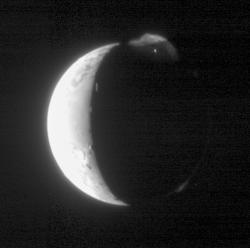 Another photo shows Io’s volcano Tvashtar erupting at the 1 o’clock position. The plume is about 330 km (200 miles) high and shows an asymmetrical and complicated wispy texture with incandenscent lava shown as the bright point of light. Another plume, likely from the volcano Masubi, is illuminated by Jupiter at the 5 o’clock position. A third and much fainter plume, barely visible at the 2 o’clock position, could be the first plume seen from the volcano Zal Patera.
New Horizons and Io continue to astonish us with these unprecedented views of the solar system’s most geologically active body.
Jupiter’s rings
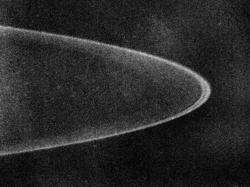 NASA releases a photo of Jupiter’s narrow ring measuring about 1,000 km (600 miles) wide with a fainter sheet of material inside it. A planetary astronomer suggests that the ring’s largest boulders are corralled into a narrow belt by the influence of Jupiter’s two innermost moons. The ring also appears to darken in the middle, a possible hint that a smaller, undiscovered moon is clearing out a gap. The faint glow extending in from the ring, the “halo,” is likely caused by fine dust that diffuses in toward Jupiter.
This is one of the clearest pictures ever taken of Jupiter’s faint ring system. The ring looks different from what we expected it has usually appeared much wider.
Io’s eruptions
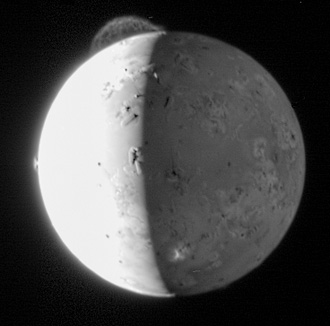 At a distance of 2.5 million km (1.5 million miles) from Io, New Horizons takes a photo of three volcanic eruptions taking place: Tvashtar’s 290-km (180-mile) high dust plume at the 11 o’clock position, Prometheus’ 60-km (40-mile) high plume at 9 o’clock, and Masubi’s eruption appearing as a bright spot near the bottom on the night side.
Jupiter gravity boost
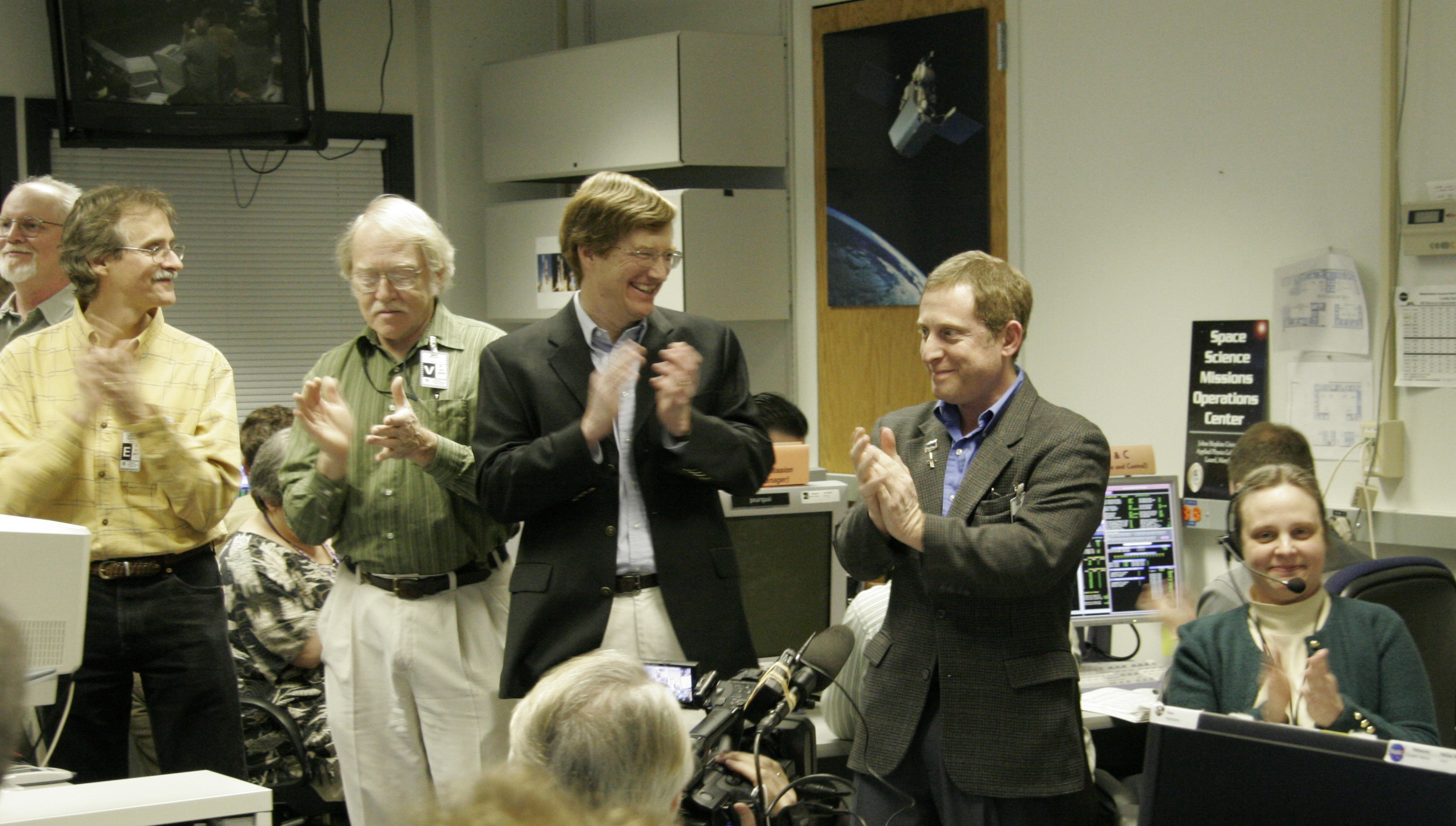 New Horizons makes its closest approach to Jupiter at a distance of 2.3 million km (1.4 million miles) passing through an aim point just 500 miles across in order to get a gravity assist that will boost its speed toward Pluto. The probe gains almost 14,000 km/h (9,000 mph) accelerating to over 83,600 km/h (52,000 mph). It has traveled 800 million km (500 million miles).
We’re on our way to Pluto. The swingby was a success; the spacecraft is on course and performed just as we expected.
Little Red Spot
 New Horizons’ LORRI snaps a picture of the Little Red Spot from 3 million km (1.8 million miles).
These LORRI images of the Little Red Spot are amazing in their detail. They show the early stages of this newly reddened storm system with a resolution that far surpasses anything available until now.
Io eruption
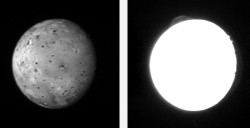 From 4 million km (2.5 million miles) away, New Horizons’ LORRI instrument photos Io’s Tvashtar volcano erupting. Jupiter’s tidal interaction with Io heats it up and causes it to be volcanically active. The bright photo shows Tvashtar erupting a huge dust plume at the 11 o’clock position. The bumps at the 2 o’clock position are tall mountains. The darker photo shows surface features of Io.
This is the best image of a large volcanic plume on Io since the Voyager flybys in 1979.
Observes solar wind
New Horizons’ SWAP instrument sends back data on the solar wind around Jupiter. From a distance of 40 million miles, it observes an immense structure of compressed, dense, hot ionized gas that forms in the solar wind, called a co-rotating interaction region.
These solar wind structures collide with the magnetospheres of planets and, we believe, cause major variations in their structures. Because it has the largest magnetosphere in the solar system, the effects of the solar wind at Jupiter could have significant implications for all the planets.
Jupiter rendezvous
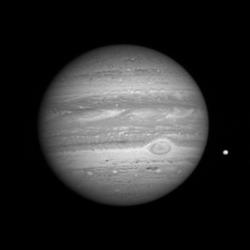 New Horizons rendezvous with Jupiter begins with black-and-white photos of Jupiter and infrared images of its moon Callisto. The probe is 81 million km (50 million miles) from the planet.
Our ground team has worked very hard to get to this point. Now the curtain is rising on the next stage of Jupiter-system exploration. It’s exciting!
Criticises Trump
O’Donnell, criticises and mocks Trump on The View about Trump wanting to give disgraced Miss America a second chance. She says Trump’s statements annoyed her, “on a multitude of levels’ related to speaking about moral issues.
He inherited a lot of money, and he’s been bankrupt so many times where he didn’t have to pay. … I just think that this man is sort of like one of those, you know, snake oil salesmen in Little House on the Prairie. . . There he is, hair looping, going everyone, everyone deserves a second chance. He’s the moral authority? Left the first wife, had an affair, left the second wife, had an affair, had kids both times, but he’s the moral compass for twenty year olds in America. Donald, sit and spin, my friend.

Responds to O’Donnell
Trump reponds to O’Donnell’s criticism with a number of insults. On Fox News, Trump says O’Donnell is”a despicable person,” and that she is probably jealous because Miss USA likes him but doesn’t like O’Donnell.
[She is] disgraceful, a horrible human being, a terrible person … a loser. Her magazine failed. The ratings for her show were terrible. They basically threw her off the air. … She is not a good person. She makes false statements. Barbara Walters, in my opinion rues the day she put that animal on her show. She’s an extremely unattractive person who doesn’t understand the truth … She has failed at everything she has done…She’s a bully and she sucker punches people.
O’Donnel does not reply directly on the View.

To sue O’Donnell
Trump announces he will sue O’Donnell for her The View comments. Trump refuses to discuss the details of the legal filing but stated O’Donnell will understand when she sees the reasons.
She says things that come to her mouth, she’s not smart, she’s crude, she’s ignorant and to be honest I look forward to sueing Rosie. I’m gonna sue her and I look forward to it. She’s really very dangerous for the show…Rosie will find out what we’re suing her for. She knows what we’re suing her for. The lawsuit is already in the works. It’s something I look very forward to.
Sees Pluto
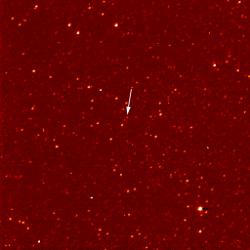 The Long Range Reconnaissance Imager (LORRI) takes its first photos of Pluto from 4.2 billion km (2.6 billion miles) away. At this distance Pluto is just a faint point of light among the stars.
Finding Pluto in this dense star field really was like trying to find a needle in a haystack. LORRI passed this test with flying colors, because Pluto’s signal was clearly detected at 30 to 40 times the noise level in the images.
Jupiter images
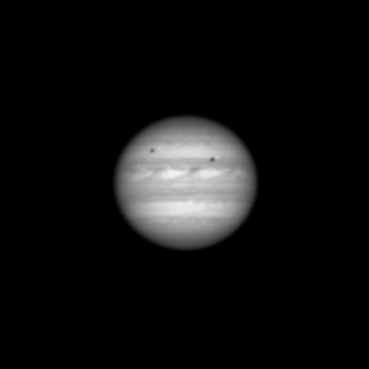 New Horizons probe takes its first pictures of Jupiter with its Long Range Reconnaissance Imager (LORRI) from 291 million km (181 million miles) away.
LORRI’s first Jupiter image is all we could have expected. We see belts, zones and large storms in Jupiter’s atmosphere. We see the Jovian moons Io and Europa, as well as the shadows they cast on Jupiter. It is most gratifying to detect these moons against the glare from Jupiter.
Claims no resistance from Constand
Cosby claims in his deposition that the intercourse between himself and Constand was not resisted and that he took her lack of resistance as consent for the intercourse.
I don’t hear her say anything. And I don’t feel her say anything, and so I continue and I go into the area that is somewhere between permission and rejection. I am not stopped.
Tracks asteroid
 In order to test its tracking and imaging capabilities, the probe tracks and photographs asteroid 2002 JF56 in the asteroid belt coming to within 102,000 km. The asteroid is about 2.5 km in diameter.
The asteroid observation was a flight test, a chance for us to test the spacecraft’s ability to track a rapidly moving object and to refine our sequencing process. The objects we will observe this winter in the Jupiter system will appear to be moving across the sky much more slowly than this asteroid, so these observations were an unexpected opportunity to prepare for the even faster tracking rates we’ll experience in summer 2015, when the spacecraft zips through the Pluto system at more than 31,000 miles per hour.
The probe is now 283 million km (176 million miles) from Earth traveling at 27 km (17 miles) per second relative to the sun.
Launch successful
The Atlas V rocket with the New Horizons probe is launched successfully. After 44 minutes and 53 seconds it separates from its solid-fuel kick motor. Five minutes later mission control receives the first signals from the probe that all is well. The fastest probe ever launched is hurtling through space at 36,000 mph on its three billion journey to Pluto. NASA:
Today, NASA began an unprecedented journey of exploration to the ninth planet in the solar system. Right now, what we know about Pluto could be written on the back of a postage stamp. After this mission, we’ll be able to fill textbooks with new information.

Launch delayed again
Severe storms knock out power to the New Horizons mission control center at John Hopkins University in Maryland. Although they have backup power, the team wants to be sure they have enough backup before proceeding with critical operations like launching and early flight operations. They decide to delay the launch for the following day.
We’ve been working on this for 17 years so I don’t think a couple of days are going to hurt us.